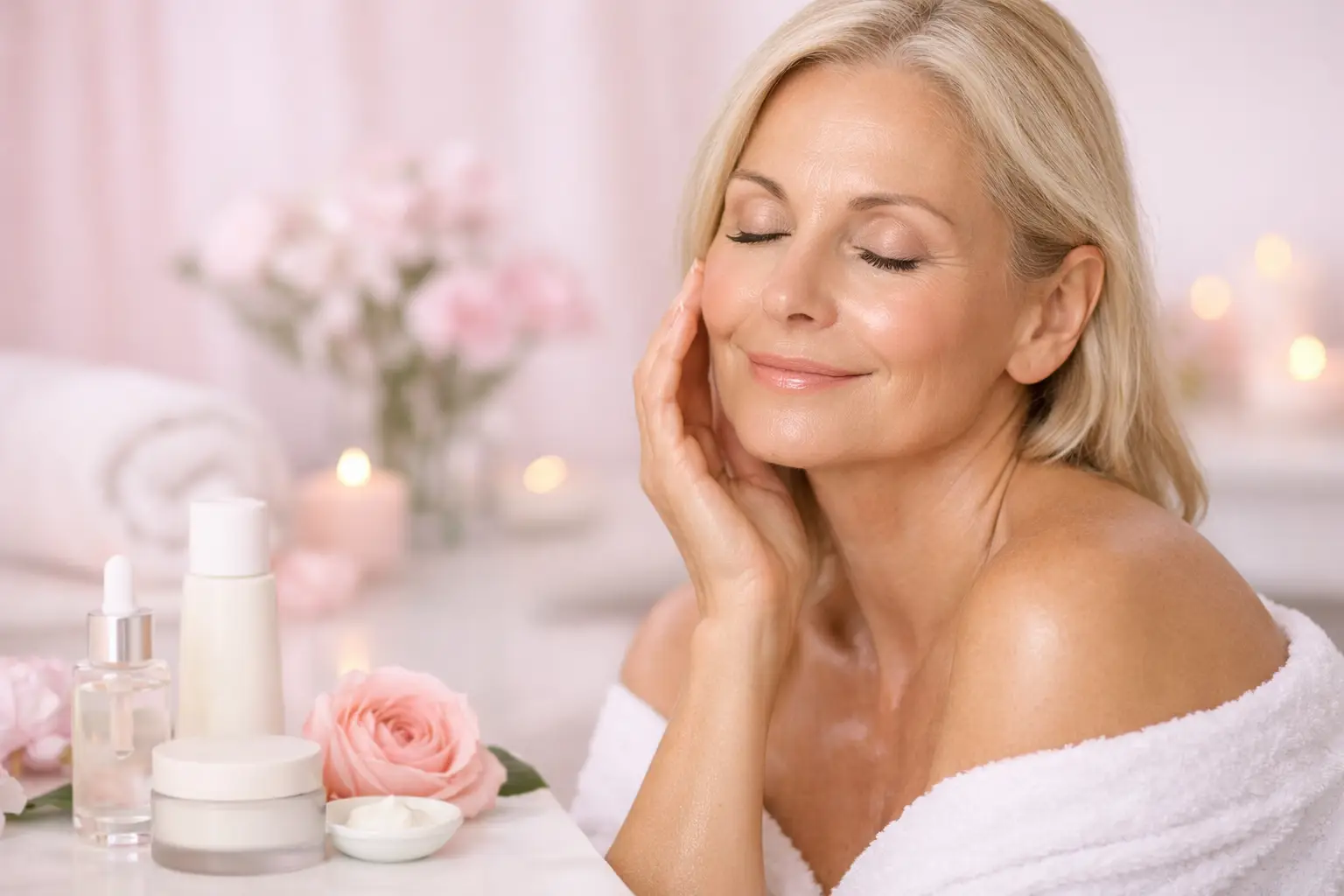
The moment before you touch your face can become a quiet homecoming. Self love, skin rituals and the question, “why is journalling good for your health?” belong in the same conversation because each invites you to pause, notice what you need and respond with care. When life feels full, your skincare routine and a few honest lines on a page can offer something beautifully simple: a way back to yourself.
This is not about chasing perfection, performing wellness or adding another task to an already busy day. It is about turning care into a practice of self-respect. A nourishing facial mist, the warmth of body oil between your palms and a journal waiting beside the bed can become small, steady reminders that you are worthy of your own attention.
Why self love needs a ritual, not just a sentiment
Self love is often spoken about as a feeling we should somehow find. Yet feelings shift. Ritual is what helps us return when confidence feels distant, skin looks tired or our inner voice has become more critical than kind.
A ritual gives an ordinary action meaning. Applying skincare can be rushed maintenance, or it can be a two-minute act of presence. Journalling can be a record of the day, or it can be a private place to hear your own wisdom before everyone else’s needs and opinions rush in.
The difference is not having a flawless routine. It is the intention beneath it. Rather than looking in the mirror for what needs fixing, you might ask, “What would help me feel cared for right now?” That question gently moves the focus from judgement to connection.
For many women, especially in seasons of caring for others, career pressure, relationship change or hormonal shifts, this distinction matters. You do not need to earn rest, softness or beauty. You can choose them as expressions of your inherent worth.
Skin rituals that help you slow down
Luxury lies as much in the feeling as it does in the formula. Botanical skincare invites the senses to take part: the texture of a serum, a delicate floral aroma, the glow of oil pressed across the collarbones. These details can signal to your nervous system that you have permission to soften.
Begin with one unhurried breath before cleansing. Let your exhale be longer than your inhale. Follow with a facial mist, allowing the cool veil to settle before you reach for the next step. As you apply serum or facial oil, use light upward strokes and a relaxed touch. There is no need to overwork the skin. Gentleness is often the most elegant approach.
An evening body ritual can be equally restorative. Warm a few drops of body oil in your hands and apply it after bathing while skin is still slightly damp. Move slowly over your arms, legs and décolletage. This is not a promise that every worry will disappear, nor a substitute for professional support when you are struggling. It is a sensory cue that the day is changing and your body deserves tenderness.
At The Love Charm Collective, skincare is designed to be more than a cosmetic step. It can be a meaningful pause where natural radiance, calm and confidence are tended to together.
Choose consistency over complexity
A ten-step routine may feel delightful for some women and completely unrealistic for others. It depends on your skin, your time and the season you are in. A ritual only supports you when it fits your real life.
If mornings are busy, choose two purposeful moments: mist and moisturise while setting an intention. If evenings are your quieter time, cleanse, apply your chosen treatment and add body oil before bed. Keep your products visible and your routine simple enough to repeat even on the less polished days.
Consistency also supports the skin. Introducing too many active products at once can leave sensitive or reactive skin feeling unsettled. Listen closely, patch test when trying something new and seek advice from a qualified professional for persistent concerns. Self love includes respecting your skin’s limits rather than pushing it towards someone else’s ideal.
Why is journalling good for your health?
Journalling offers a place to put down the thoughts you have been carrying. When feelings stay unnamed, they can seem larger and more tangled. Writing does not solve every problem, but it can help create clarity around what is happening internally – and what you may need next.
For emotional wellbeing, the value is often in reflection. A journal can help you notice patterns: the situations that drain you, the conversations that leave you feeling expanded, the habits that support better rest or the beliefs that keep shrinking your voice. Over time, this awareness can make it easier to choose boundaries, ask for support and respond to yourself with greater compassion.
There can be physical benefits too, though they are not magic. A calming writing practice before bed may help some people transition out of mental busyness. Recording symptoms, sleep, stress or skin changes can also give you useful information to discuss with a health professional. If journalling brings up distressing memories or makes you feel overwhelmed, pause and consider support from a qualified therapist. The page should feel like a place of care, not another demand.
Most of all, journalling strengthens your relationship with your own voice. We are often taught to be agreeable, capable and endlessly available. Writing privately lets you be truthful before you are polished. That honesty is a deeply feminine kind of power.
A five-minute ritual for skin, self worth and clarity
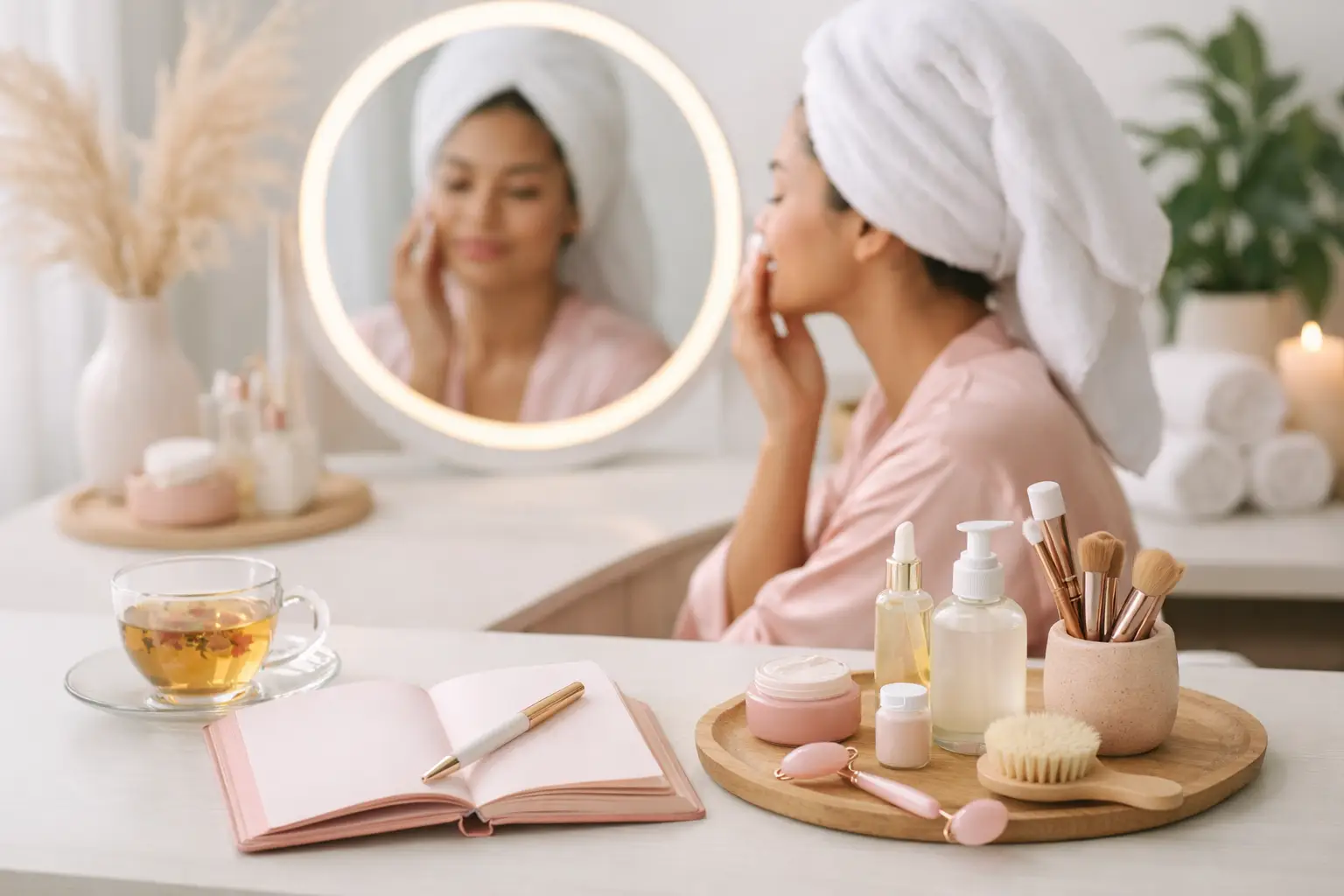
Place your journal where you do your evening skincare. After cleansing and applying your chosen products, sit for five minutes with a cup of herbal tea or a glass of water. Rest one hand on your heart or abdomen, take three slow breaths, then write without editing.
You might begin with: “Today I felt most like myself when…” Or try: “My skin, body and heart need…” If you are navigating a difficult relationship, ask: “What is true for me beneath the urge to keep the peace?” These prompts are not designed to produce a perfect answer. They are an invitation to become more intimately acquainted with yourself.
Finish by writing one caring action you can take tomorrow. It may be as small as stepping outside at lunchtime, booking an appointment, declining an invitation, drinking more water or giving yourself an extra few minutes in the morning. Small promises kept with yourself build trust from the inside out.
Let your reflection become kinder
The mirror and the journal can both become places of criticism if you approach them with a harsh inner voice. You may look closely at pigmentation, fine lines, breakouts or tiredness. You may fill pages with everything you did wrong. When that happens, do not force false positivity. Instead, practise a more accurate and compassionate perspective.
Try describing rather than judging. “My skin looks dehydrated today” is different from “I look awful.” “I felt hurt when that happened” is different from “I am too sensitive.” Language shapes the emotional atmosphere of a ritual. The aim is not to deny what is hard, but to meet it without abandoning yourself.
You may also choose one affirmation that feels believable rather than grand. “I can care for myself today.” “My worth is not dependent on productivity.” “I am allowed to take up space in my own life.” Say it while pressing your palms gently over your face or smoothing oil along your arms. Let the words settle through repetition, not pressure.
Make space for what truly nourishes you
There will be nights when you only manage cleanser and bed, and mornings when the journal remains closed. That does not mean you have failed at self care. Ritual is not a test of discipline. It is a relationship you can return to, again and again.
When you meet your skin with a softer touch and meet your thoughts with an open page, beauty becomes magnetic in the most grounded sense. You begin to carry yourself differently: less as a project to improve, more as a woman deserving of devotion. Embrace your magic in the small, repeatable moments. They are often where a radiant life quietly begins.