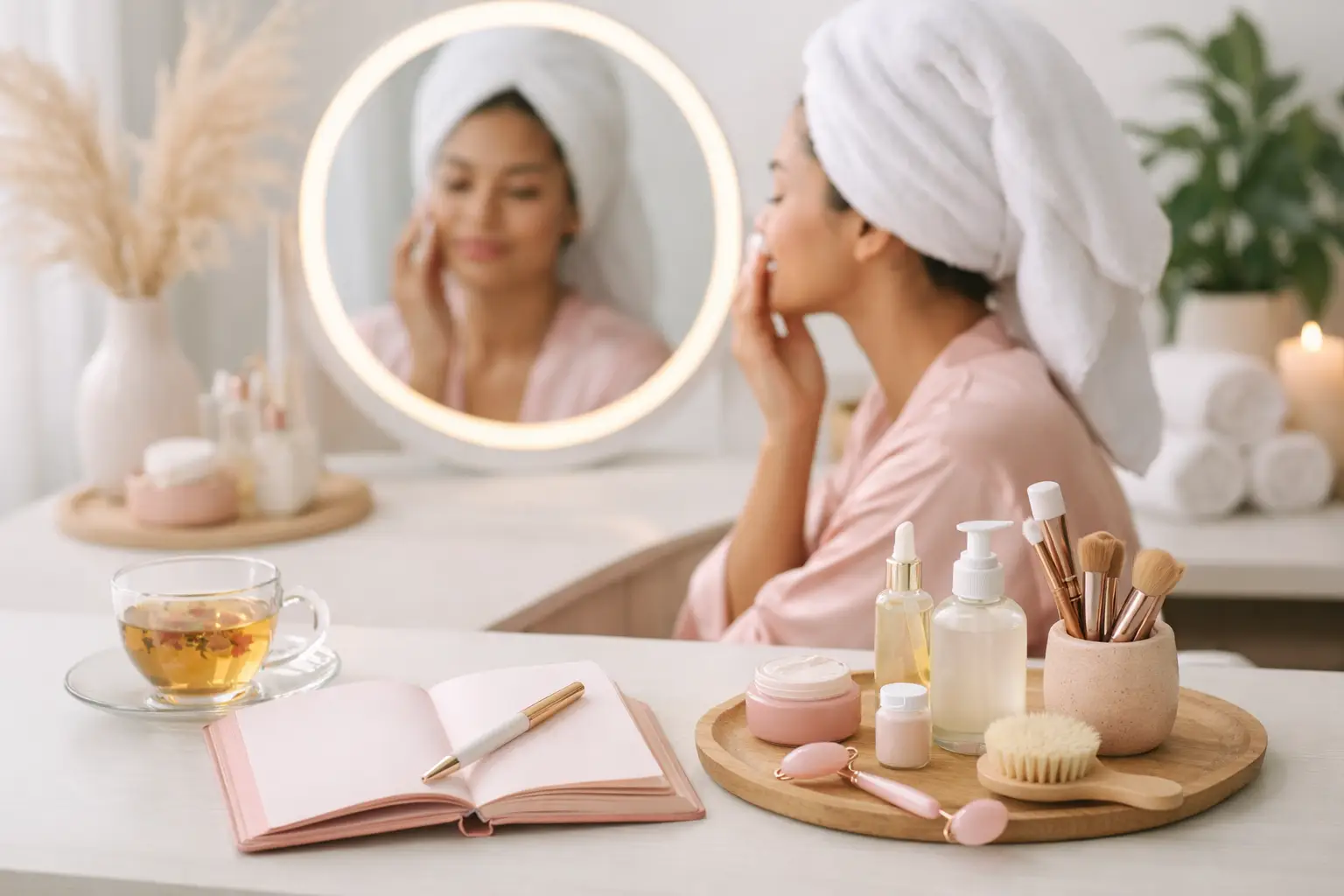
Mature skin does not need a battle plan. It needs thoughtful care: enough moisture to feel comfortable, protective habits that honour its changing needs, and a few quiet minutes that remind you that caring for yourself is never frivolous. A skincare routine for mature skin can be beautifully simple when it focuses on skin support rather than chasing perfection.
As skin moves through its thirties, forties, fifties and beyond, it may become drier, less bouncy or more easily unsettled. Fine lines can look more noticeable when the skin is dehydrated, while uneven tone and dullness may become more apparent after years of sun exposure, stress and busy seasons of life. These changes are natural. Your ritual is an opportunity to meet them with gentleness, consistency and a little daily devotion.
What mature skin is asking for
Mature skin is not a skin type. You can still have oiliness through the T-zone, sensitivity around the cheeks, or occasional breakouts alongside dryness and fine lines. This is why a one-size-fits-all routine rarely feels quite right.
In general, skin produces less oil over time and can become slower to renew itself. The protective barrier may also feel more vulnerable, particularly during perimenopause and menopause when hormonal changes can affect moisture, firmness and sensitivity. Rather than layering every active ingredient available, mature skin often responds best to a calm, nourishing approach that protects the barrier first.
Think in terms of comfort and resilience. Does your skin feel tight after cleansing? Does make-up catch around dry areas? Are stronger products leaving your complexion red or reactive? These are useful cues, not failures. Your skin is communicating where it needs more support.
The foundations of a skincare routine for mature skin
The most effective ritual is one you can return to, morning and night. Begin with a gentle cleanse, add hydration and nourishment, then protect your skin from daylight. The details can evolve as your complexion and lifestyle do.
Cleanse without stripping your natural softness
A harsh, foaming cleanser can leave mature skin feeling squeaky clean, but that sensation often signals that too much protective oil has been removed. Choose a gentle cream, balm or low-foam cleanser that lifts sunscreen, make-up and the day without leaving your face tight.
In the morning, a light cleanse or rinse with lukewarm water may be all you need if your skin is dry or sensitive. At night, take a little more time. Massage your cleanser over the face, jaw and neck with unhurried hands, then remove it gently. This is not merely the first task of the evening. It is a small invitation to come back to yourself.
Avoid very hot water and vigorous scrubbing. Both can aggravate dryness and visible redness, especially when the weather is cool or indoor heating is running.
Layer water and oils for a cushioned glow
Hydration and nourishment are often spoken about as if they are the same thing, but they serve different roles. Hydrating products help draw water into the outer layers of skin, while facial oils and richer moisturisers help soften the skin and reduce moisture loss.
After cleansing, apply a hydrating mist, essence or serum while your skin is still slightly damp. Press it in rather than rubbing. Follow with a facial serum suited to your concerns, then seal in that comfort with a moisturiser or a few drops of facial oil. If your skin is very dry, this layering can make a noticeable difference to how smooth and luminous it looks by morning.
Botanical oils can be particularly lovely in an evening ritual, offering a sensorial finish as well as emollient comfort. The right formula should leave skin supple, not coated. If you are prone to congestion, use a lighter texture or reserve facial oil for your drier areas rather than applying a heavy layer everywhere.
At The Love Charm Collective, ritual is designed to feel as restorative as it is effective. A facial mist followed by a nourishing serum or potion can turn a hurried bathroom moment into a soft pause for breath, touch and intention.
Wear broad-spectrum sunscreen every morning
If there is one step that consistently protects the appearance of mature skin, it is daily broad-spectrum sunscreen. UV exposure contributes to uneven tone, fine lines, loss of firmness and changes in texture. Australian sunlight can be intense even when the morning feels cool or the sky is overcast.
Apply a broad-spectrum SPF 50+ sunscreen as the final step of your morning skincare, before make-up. Use enough to cover the face, neck, ears and décolletage, and reapply when you are outdoors for extended periods, sweating or towelling your face. A hat, sunglasses and shade add another welcome layer of care.
Sunscreen is not about fear of ageing. It is about protecting the skin you are in, so its natural radiance has the chance to shine through.
Introduce active ingredients with patience
Certain active ingredients can support smoother-looking texture, clearer tone and a more refined complexion. Yet mature skin can be less forgiving of an overenthusiastic routine. More is not always better.
Retinoids, including retinol, may help with the appearance of fine lines and uneven texture over time. Begin slowly, perhaps two evenings a week, and pair the product with a nourishing moisturiser. If your skin stings, flakes persistently or becomes inflamed, step back. Retinoids are generally avoided during pregnancy and breastfeeding, so seek tailored advice from a qualified health professional in that season.
Gentle chemical exfoliants may also help lift surface dullness, but they should be used thoughtfully. Once a week can be plenty for many women, particularly if you are using a retinoid or have sensitive skin. Avoid using strong exfoliants, retinoids and multiple active serums all in the same evening. Your complexion needs recovery time to maintain its calm glow.
Vitamin C can be a lovely morning option for those concerned with the appearance of uneven tone and environmental stress. Some formulas can be irritating, however, so choose a well-formulated product and introduce it gradually. If you are managing rosacea, eczema, pigmentation changes or persistent sensitivity, a dermatologist can help you build a routine that is both safe and effective.
Create a morning ritual that feels possible
Morning skincare does not need to take half an hour. A gentle cleanse or rinse, hydrating layer, moisturiser if needed, and SPF is a complete starting point. If you enjoy a little more ritual, take ten seconds while applying your products to soften your shoulders and breathe deeply.
Try setting an intention that has nothing to do with your reflection. It may be, “I move through today with ease,” or “I am allowed to take up space.” Confidence is not found in flawless skin. It grows when you practise treating yourself as someone worth caring for.
Make evenings your replenishing moment
Evening is where mature skin often benefits from a little extra nourishment. Remove the day thoroughly, apply your treatment product if you are using one, then layer hydration and a comforting moisturiser or facial oil. Extend any remaining product down your neck and across your décolletage with upward, gentle strokes.
This is also the right time to notice what your skin needs that night. On a dry, windy day, you may prefer richer layers. During a humid summer week, a lighter serum and moisturiser may be enough. Let your routine have flexibility. Skincare should serve your life, not become another rulebook to follow.
Small habits that support radiance
A beautiful complexion is supported by more than the products on your shelf. Sleep, hydration, nourishing food, movement, stress levels and hormonal health can all influence how skin looks and feels. There is no need to turn self-care into another pressure point, but simple steadiness matters.
Change your pillowcase regularly, avoid picking at your skin, and be mindful of fragrances or essential oils if you are sensitive. If a product causes burning, itchiness or swelling, wash it off and stop using it. Persistent changes in your skin, new pigmented spots or a mole that changes shape or colour should be assessed by a GP or dermatologist.
Most of all, give your routine time. Skin renewal is gradual, and meaningful results from a gentle, consistent approach are usually measured over weeks rather than days. Let each application be a reminder that beauty becomes magnetic when it is rooted in self-respect.
Your face tells the story of your laughter, your tenderness, your resilience and the life you have lived. Care for it with beautiful products, protective habits and kind hands, then step into the day ready to embrace your magic.